Curator: Mercedes Casanegra
Del 26 de junio al 12 de octubre de 2015
Opening: Thursday, June 25, 7:00 p.m.
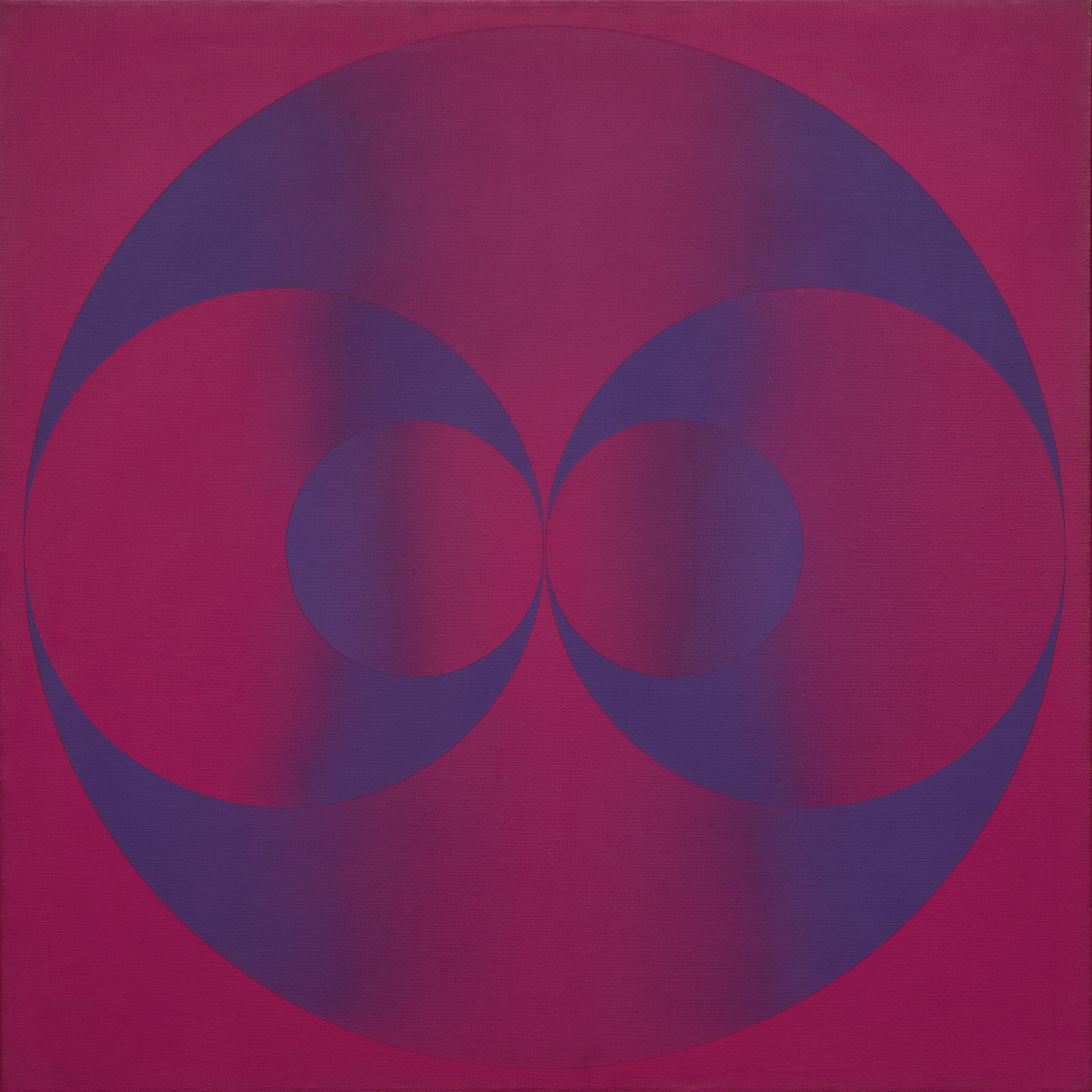
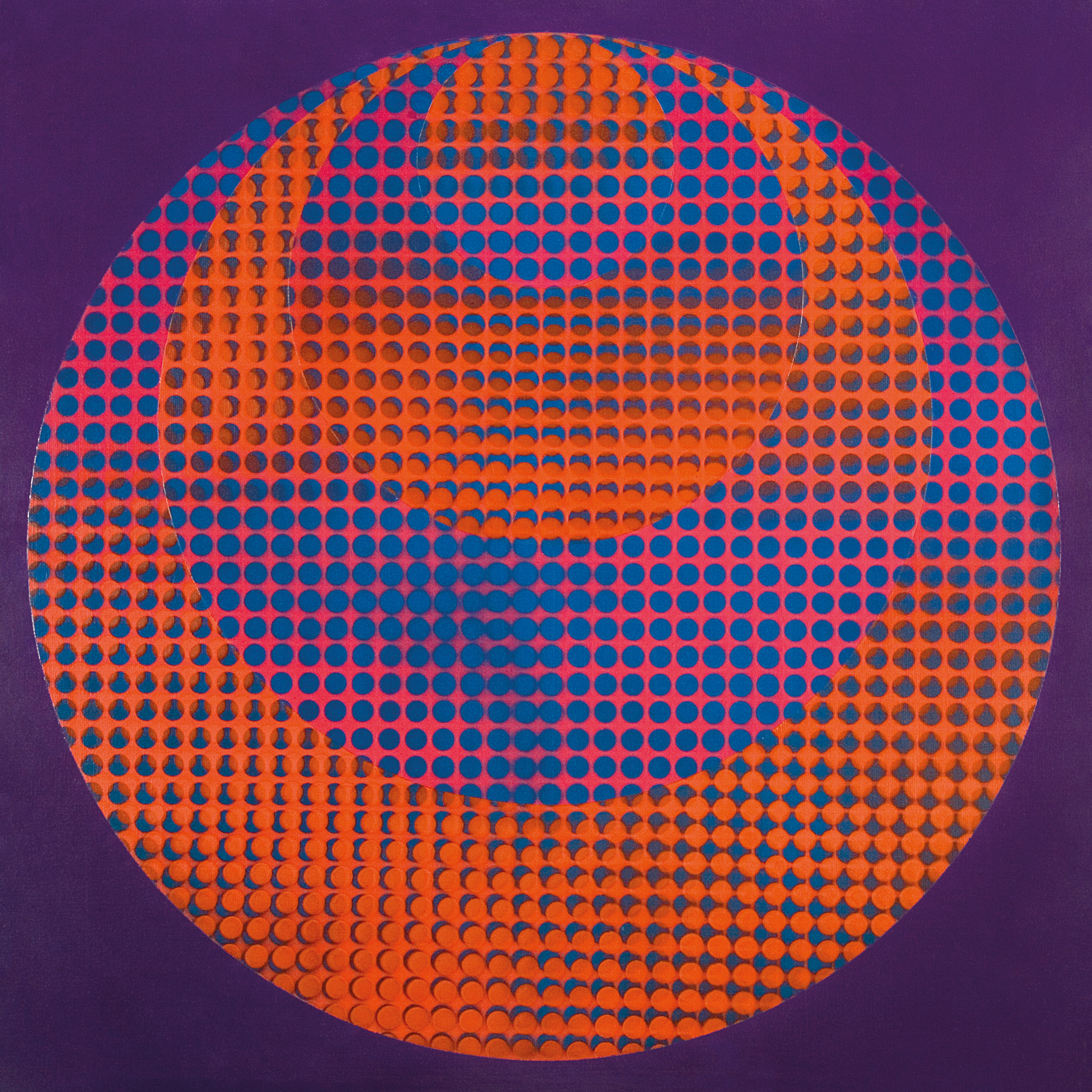
MALBA presenta una exposición antológica de Rogelio Polesello (Buenos Aires, 1939-2014), dedicada a sus obras históricas, pinturas y acrílicos producidos desde fines de los años 50 hasta mediados de los 70. La muestra reúne una selección de 120 piezas, pertenecientes a numerosas colecciones públicas y privadas del país y del exterior, como el Museo de Arte Moderno de Bogotá (MAMBO), el Museo del Banco de la República de Bogotá, el Museo Nacional de Bellas Artes (MNBA), el Museo de Arte Moderno de Buenos Aires (MAMBA), el Museo de Arte Contemporáneo de Buenos Aires (MACBA) y el Museo de Bahía Blanca (MBA-MAC), entre otras.
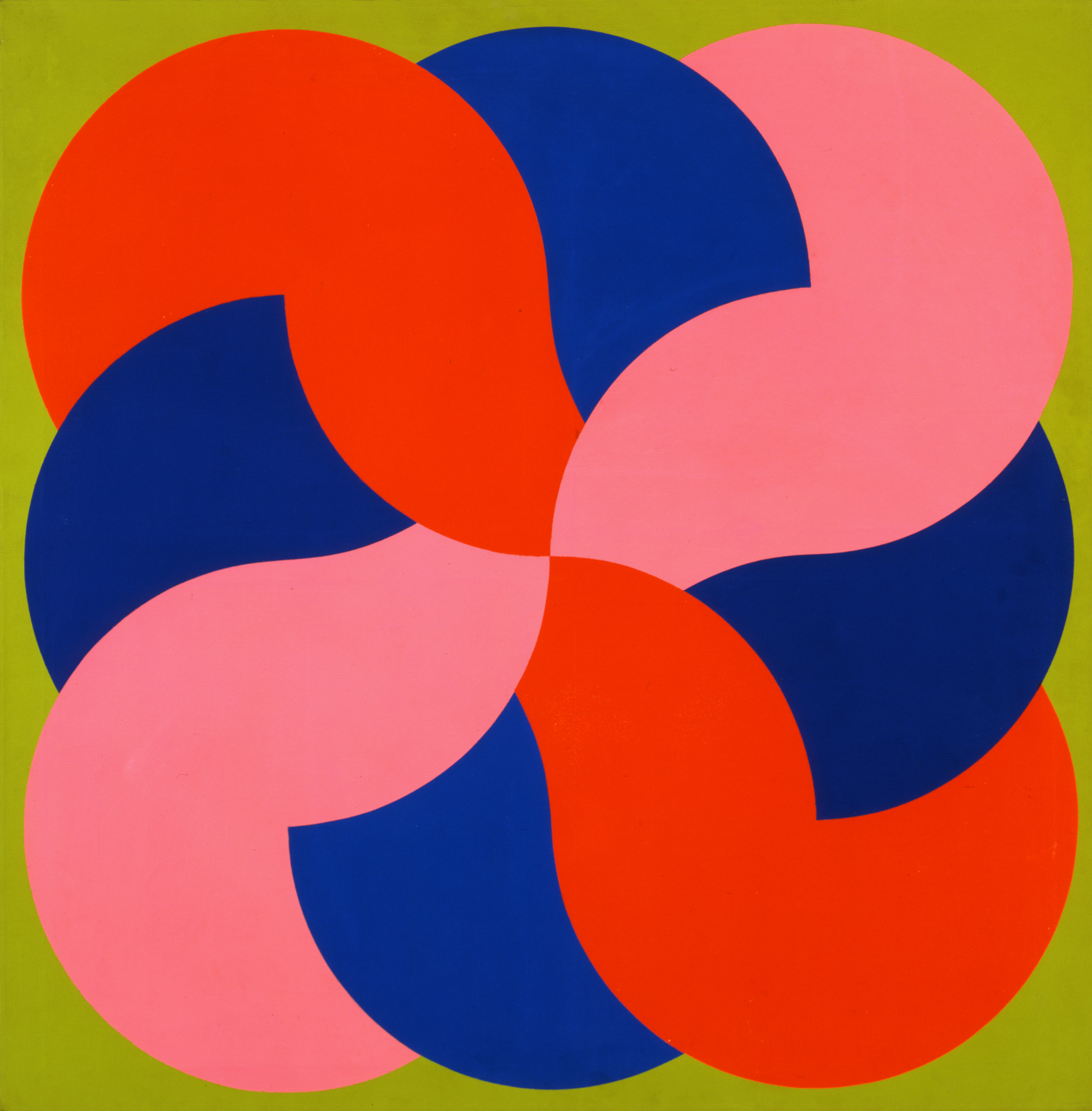
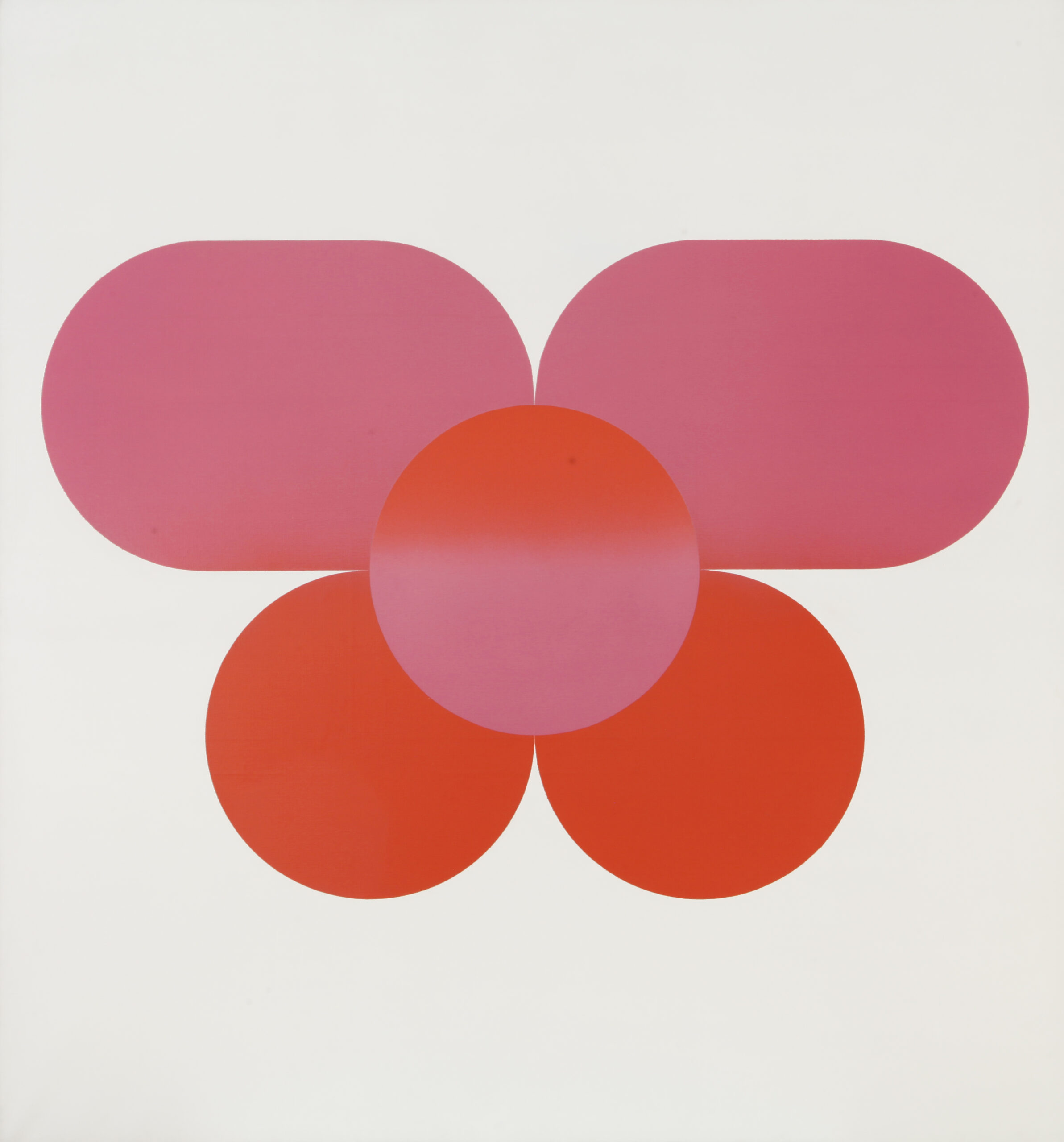
The exhibition sets out to settle the unfinished business, so to speak, surrounding Polesello’s work insofar as there are areas of his production that have not been duly analyzed or recognized such as his parallel engagement with the new design and art and with the art-design-industry triad; for Polesello, design was at the limit of an industrial art. Polesello was one of the artists that took art beyond the confines of the museum as he experimented in other settings and with other languages. His participation in Argentine abstract geometric art and Op art was both autonomous and original as he freely expanded beyond those categories, dynamically and tirelessly facing conceptual and formal challenges.
Work on this exhibition began alongside the artist two years ago, when a team from the museum tackled the task of organizing and cataloguing the Polesello archive which contains a vast number of photographs and documents, as well as correspondence with other artists, art dealers, collectors, and directors of museums and art institutions. The archive attests to Polesello’s enormous production and his connections to people active in the art work and in other disciplines such as design, film, architecture, and fashion. The exhibition will demonstrate the relevance over the course of five decades of work by an artist who defies classification.
Rogelio Polesello
Buenos Aires, 1939-2014.
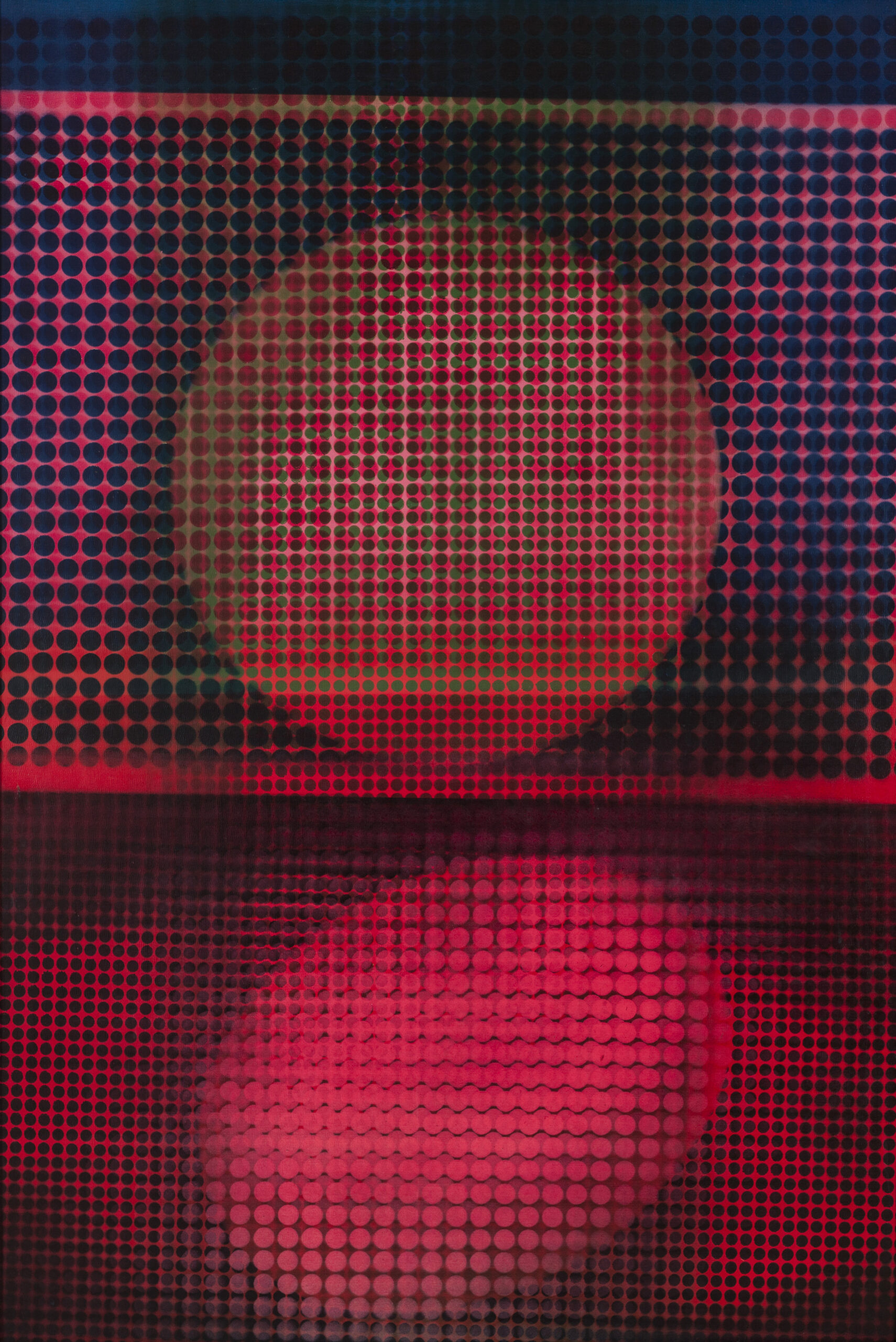
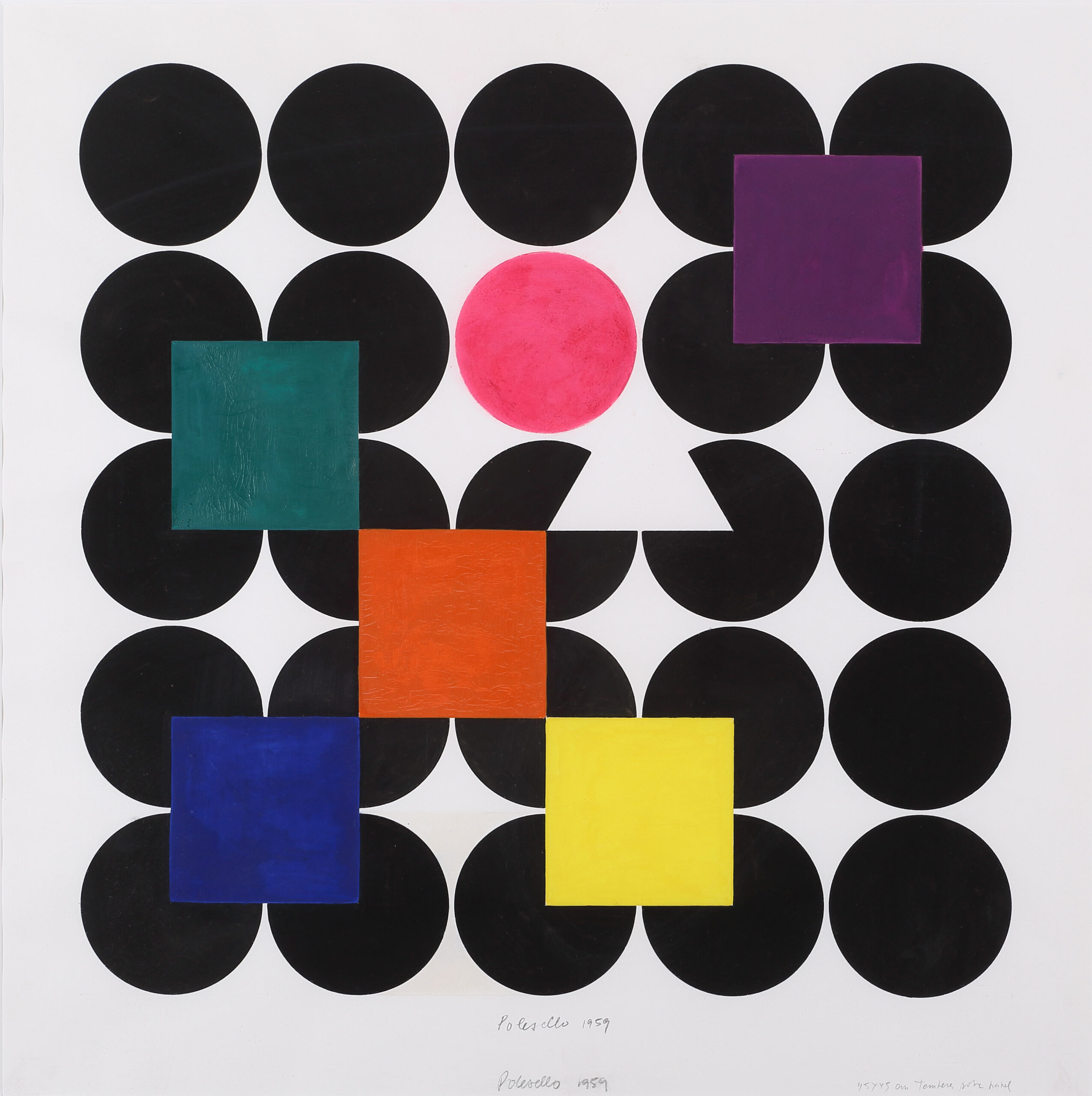
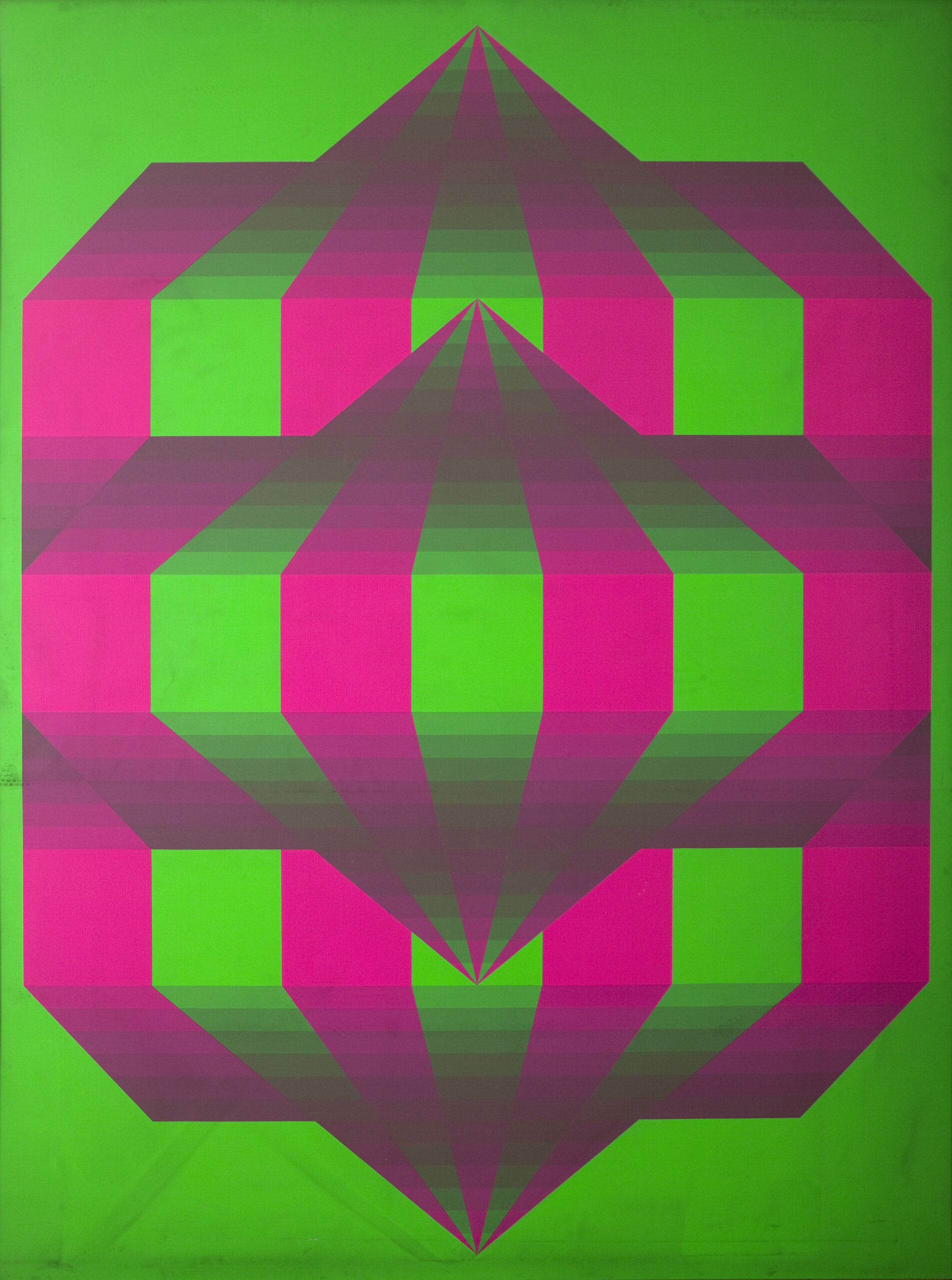
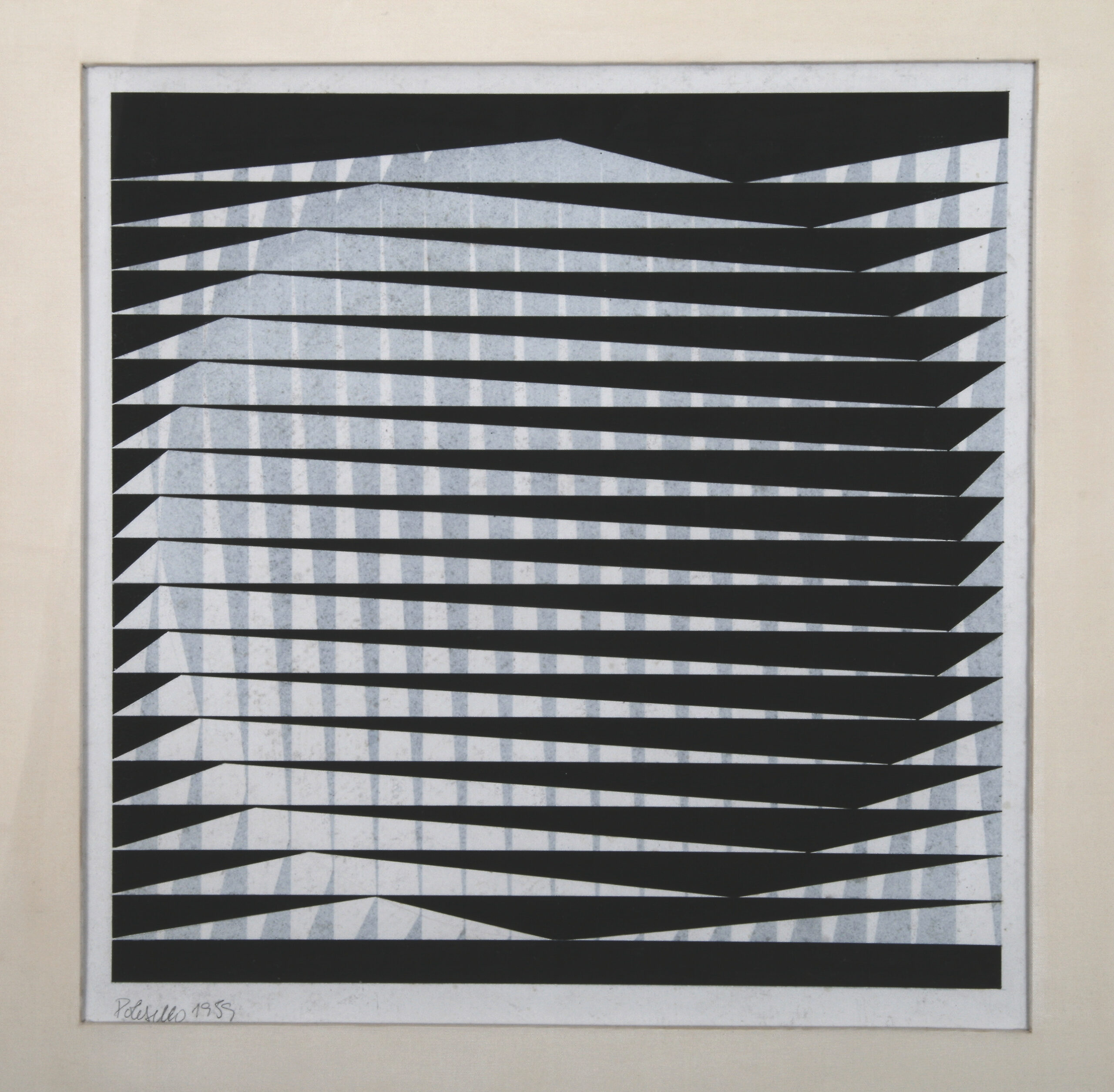
In 1958, Rogelio Polesello received a degree in printmaking, drawing, and painting from the Escuela Nacional de Bellas Artes Prilidiano Pueyrredón. In 1959, the first solo exhibition of his work was held at the Peuser Gallery. On that occasion, he showed geometric paintings with a constructivist influence that explored the possibilities of Op art. Throughout his career, he produced paintings, prints, and acrylic objects that examined the possibilities of geometric abstraction with optical effects that decomposed the image.
From an early age, he worked in advertising design, which would lead him to have experiences beyond the confines of the art world. He engaged in interdisciplinary work connected to architecture, environmental design, textile design, body painting, and interventions in public space. His work has been exhibited in many museums and galleries in Argentina and abroad.
Outstanding solo exhibitions of Polesello’ work have been held at the Pan American Union, Washington (1961), the Museo de Bellas Artes de Caracas (1966 and 1968), the Universidad de Mayagüez, Puerto Rico (1966 and 1971), the Biblioteca Luis Ángel Arango of the Banco de la República, BogotaÅL (1967), the Centro de Artes Visuales of the Instituto Torcuato Di Tella, Buenos Aires (1969), the Center for Inter American Relations, New York (1973), the Museo de Arte Moderno de BogotaÅL (1973), the Museo de Arte Moderno-Bosque de Chapultepec, Mexico City (1973), the Palais de Glace, Buenos Aires (1995), the Museo Nacional de Bellas Artes, Buenos Aires (2000), the Museo JoseÅL Luis Cuevas, Mexico City (2002), and the Centro Cultural Recoleta, Buenos Aires (2005).
His work forms part of the collections of the following institutions: the Museum of Modern Art, New York (MoMA), the Guggenheim, New York, the Art Museum of the Americas, Washington DC, the Blanton Museum, Austin, the Lowe Art Museum, Miami, the Museo de Arte Moderno de BogotaÅL, the Banco de la República, Bogotá, the Museo de Bellas Artes de Caracas, the Museo Nacional de Bellas Artes, Buenos Aires, the Museo de Arte Moderno de Buenos Aires, Museo de Arte Latinoamericano de Buenos Aires (MALBA), and the Museo de Arte Contemporáneo de Buenos Aires (MACBA).
Core Themes
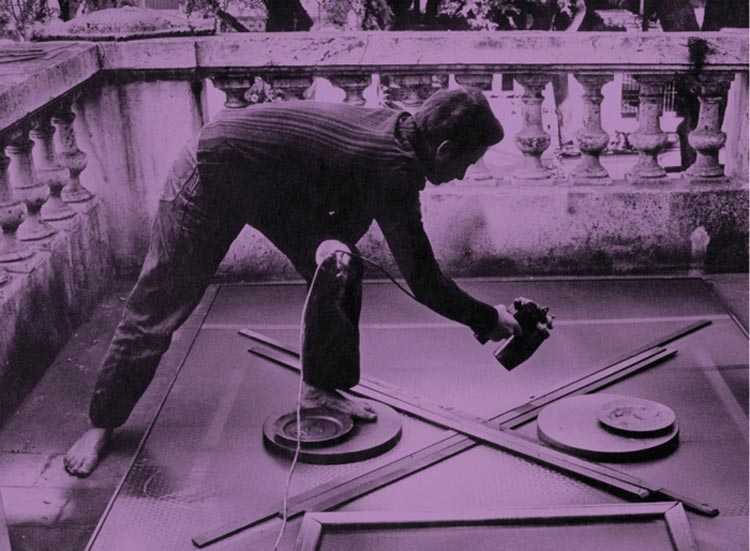
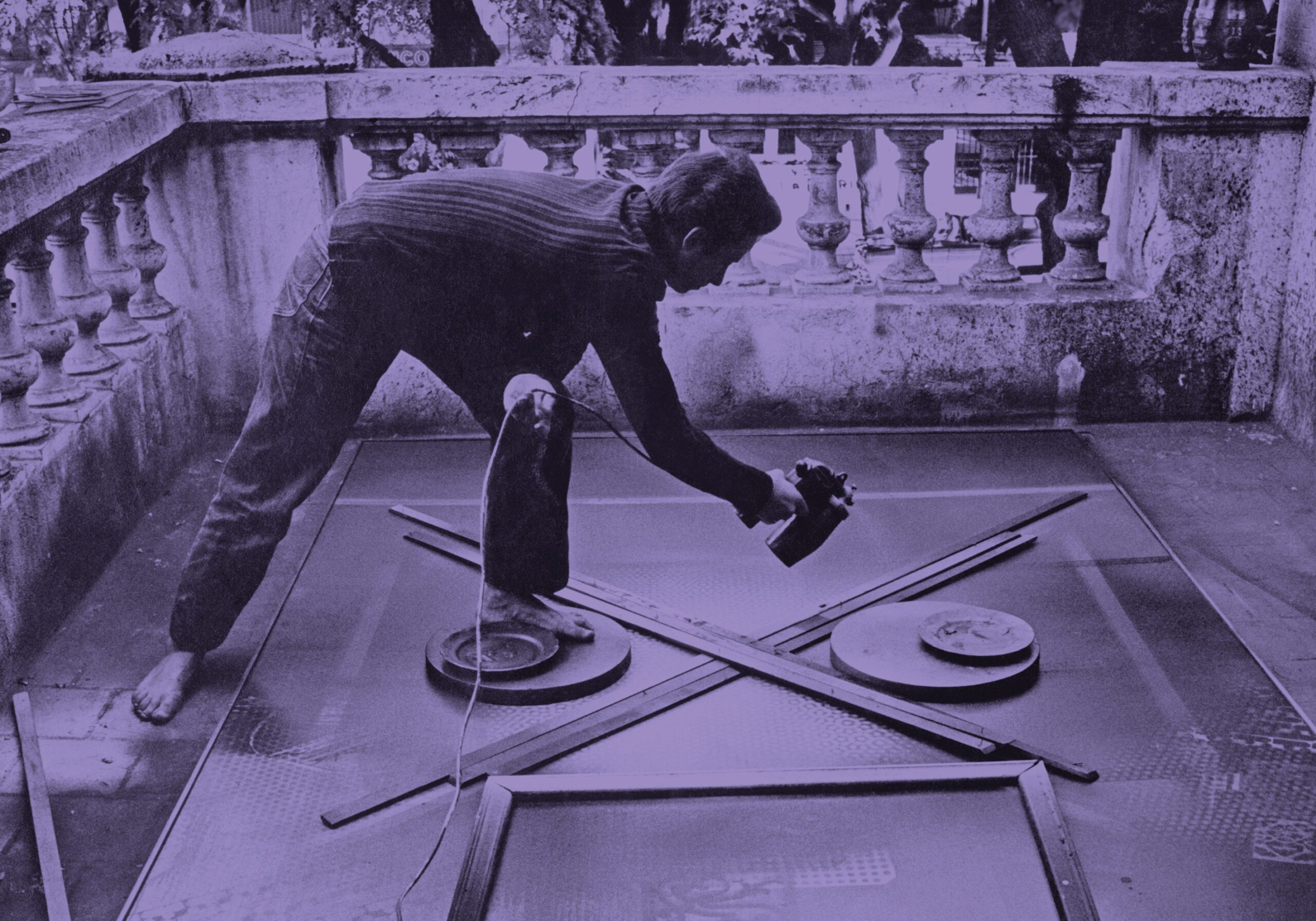
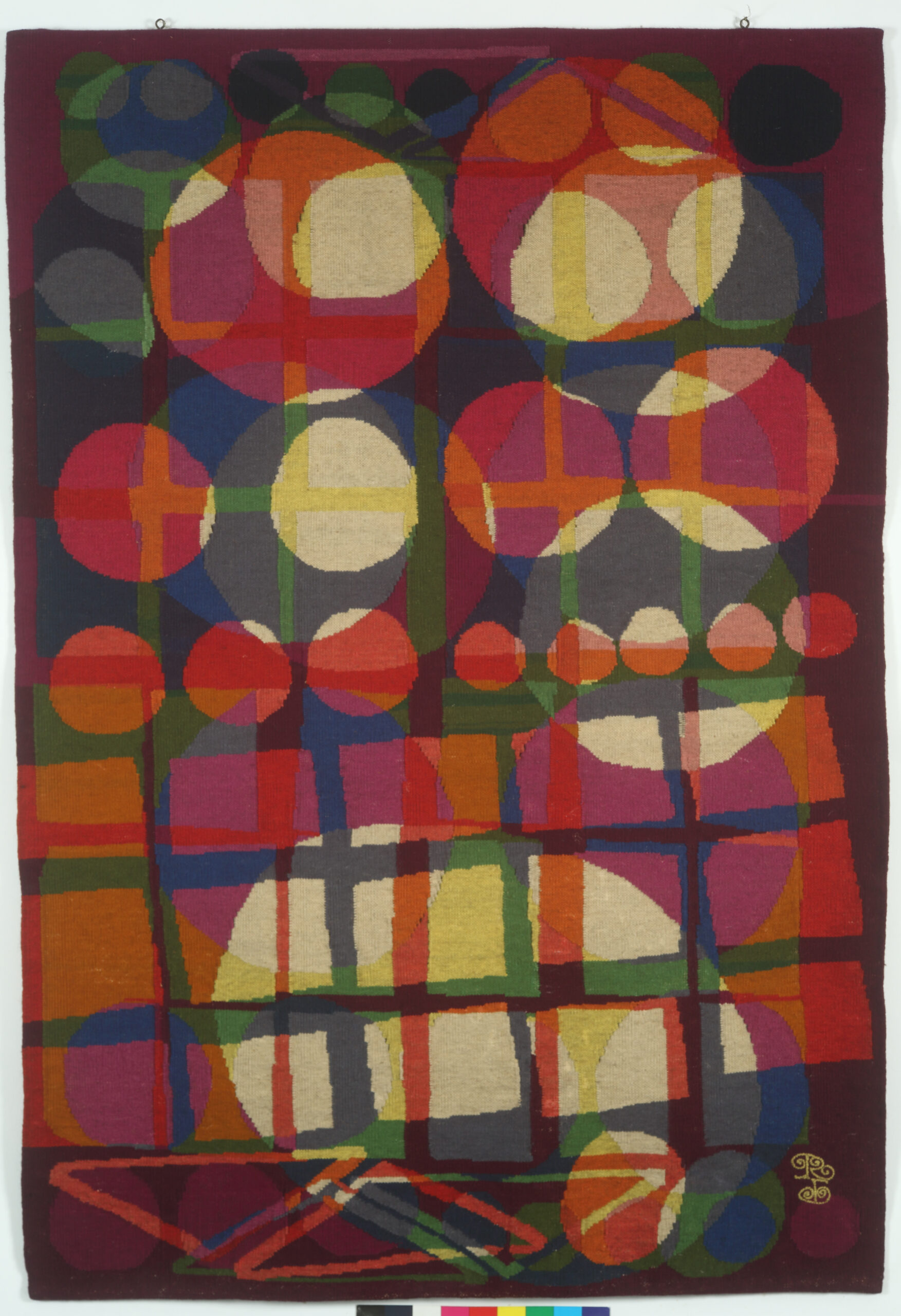
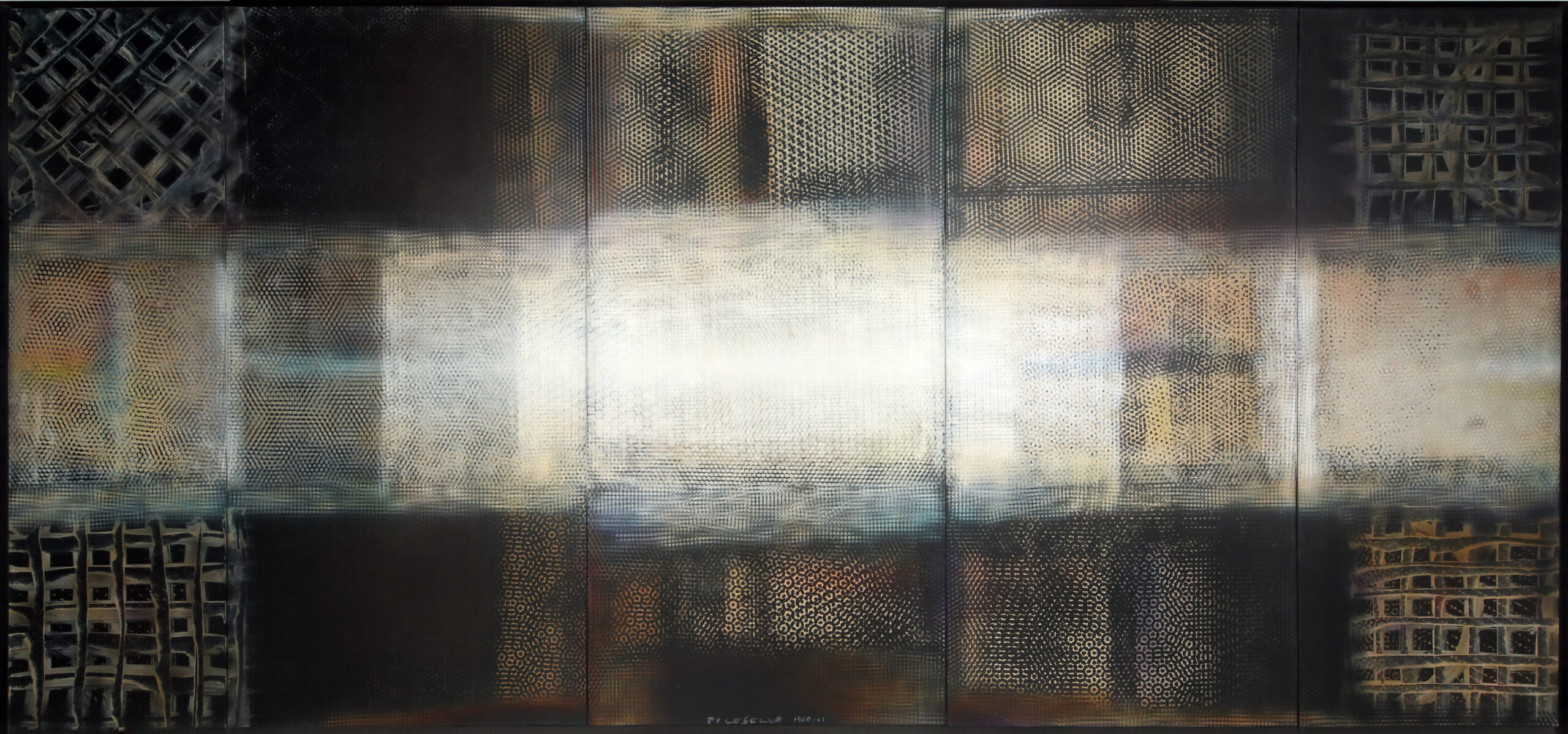
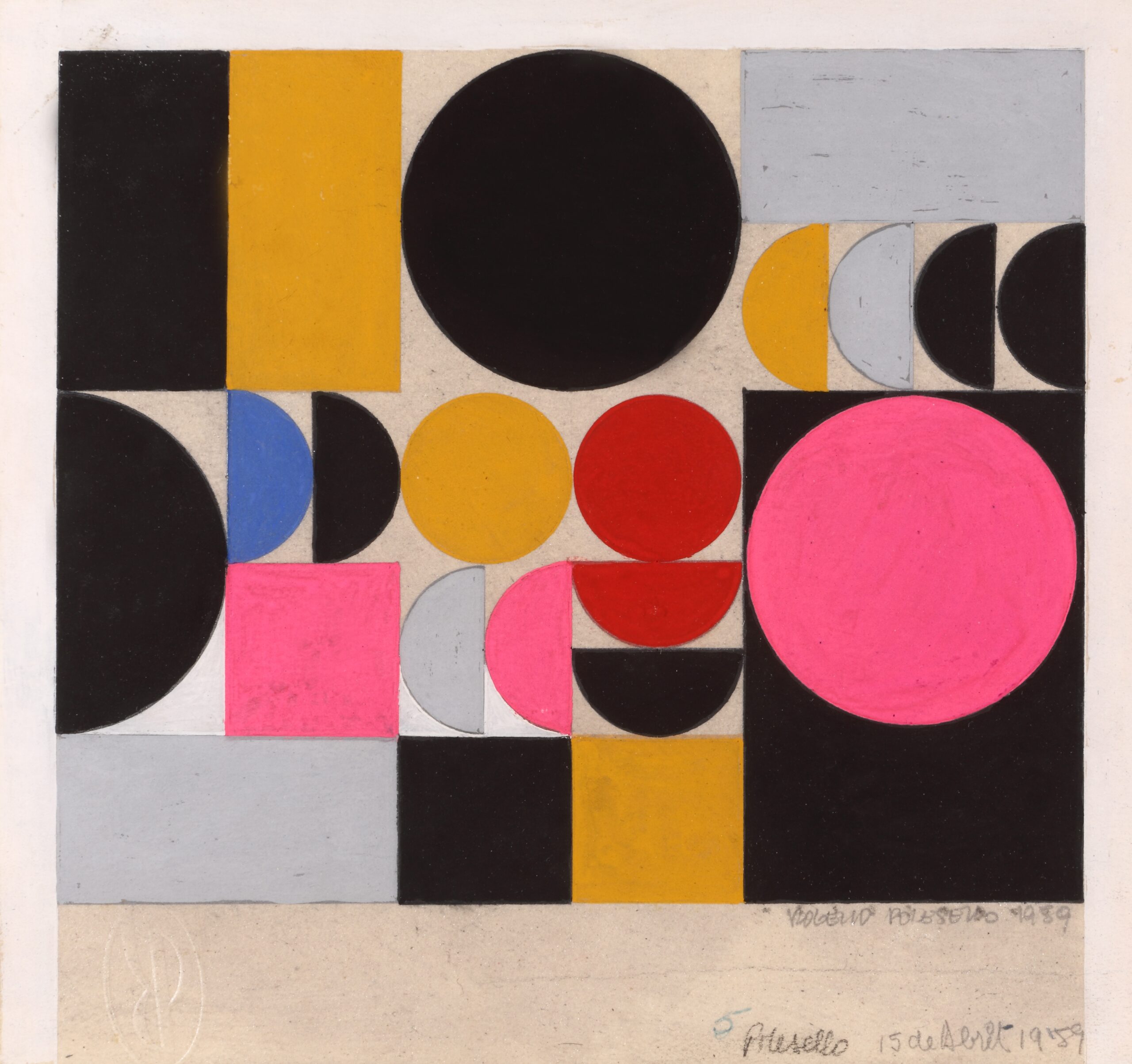
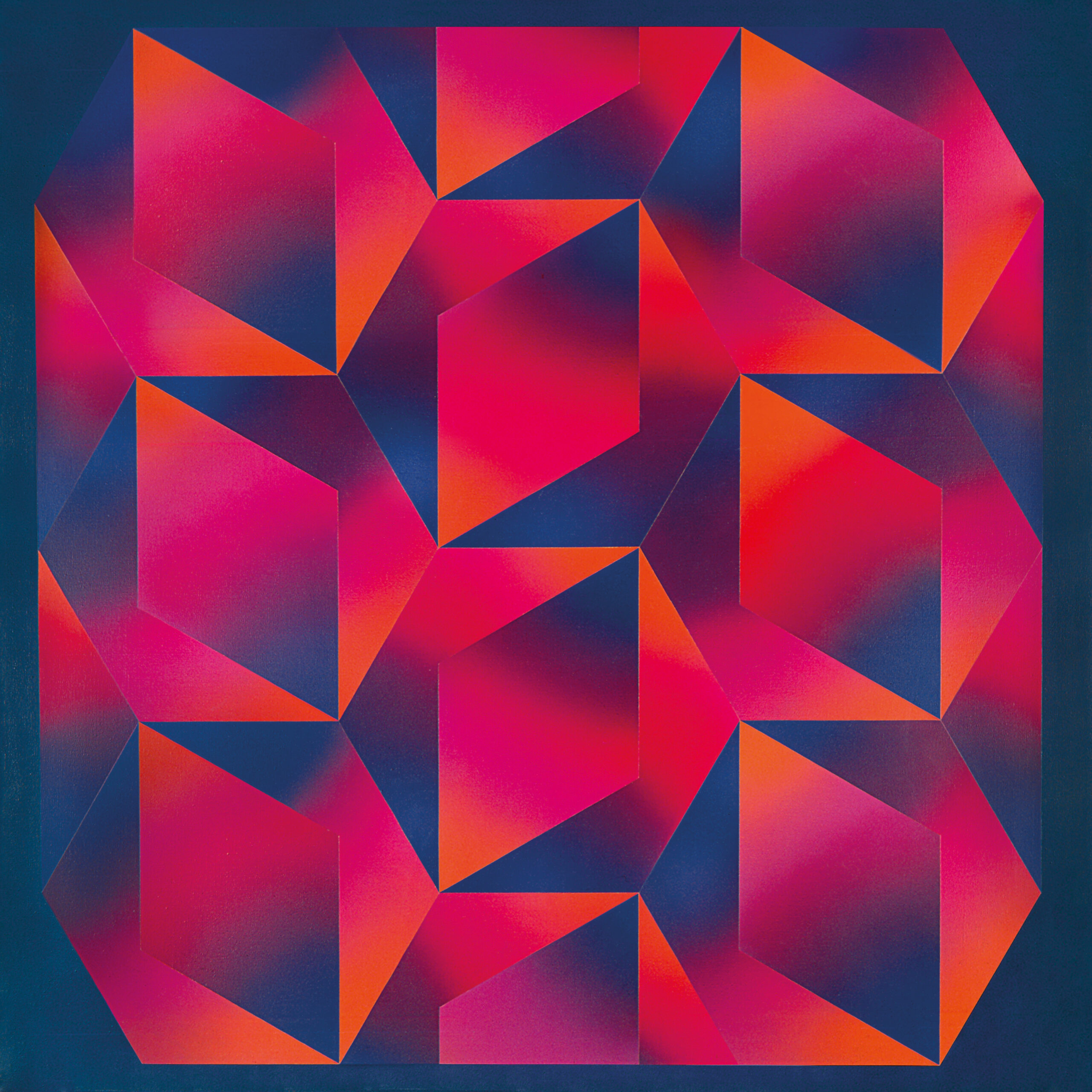
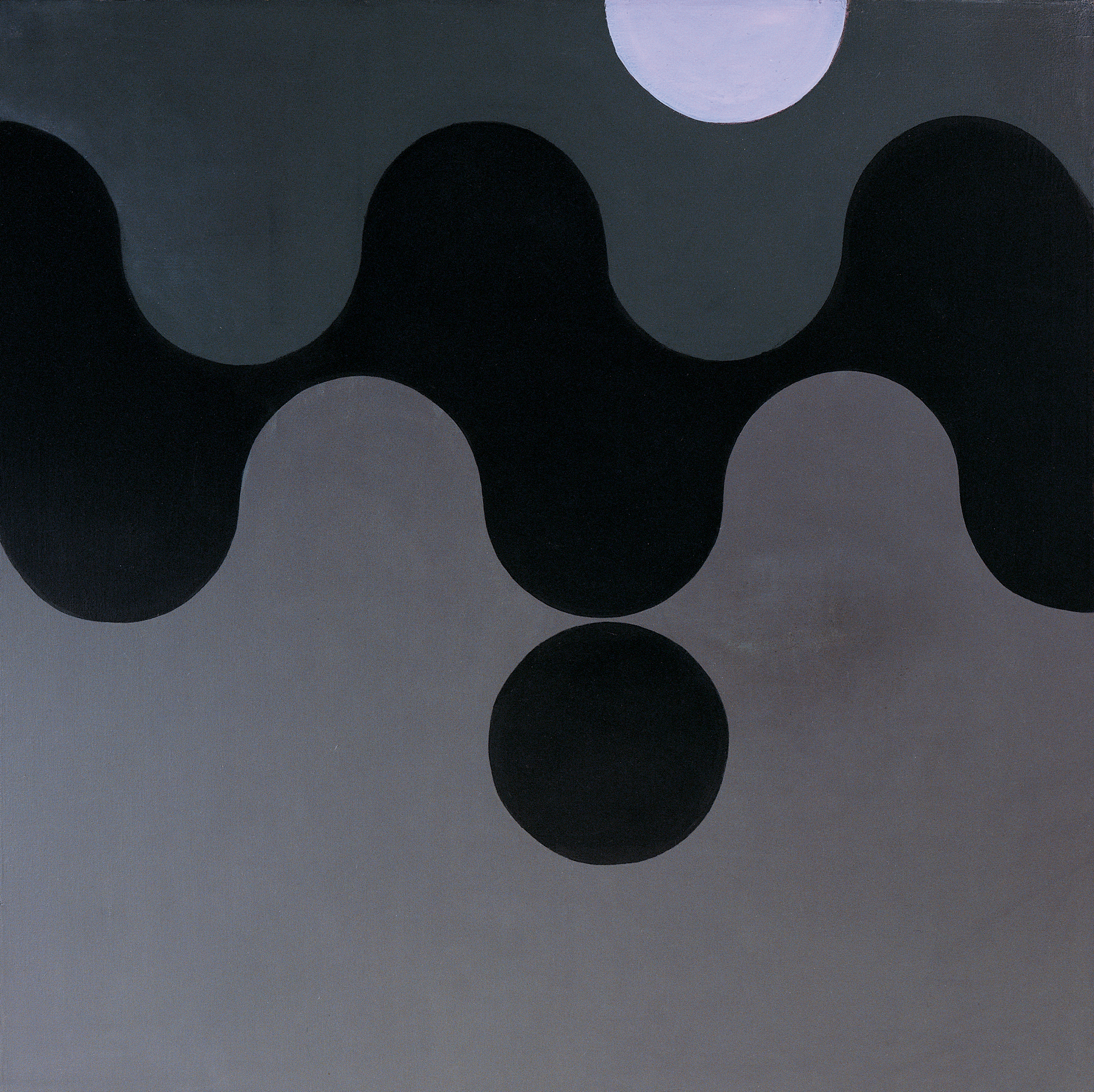
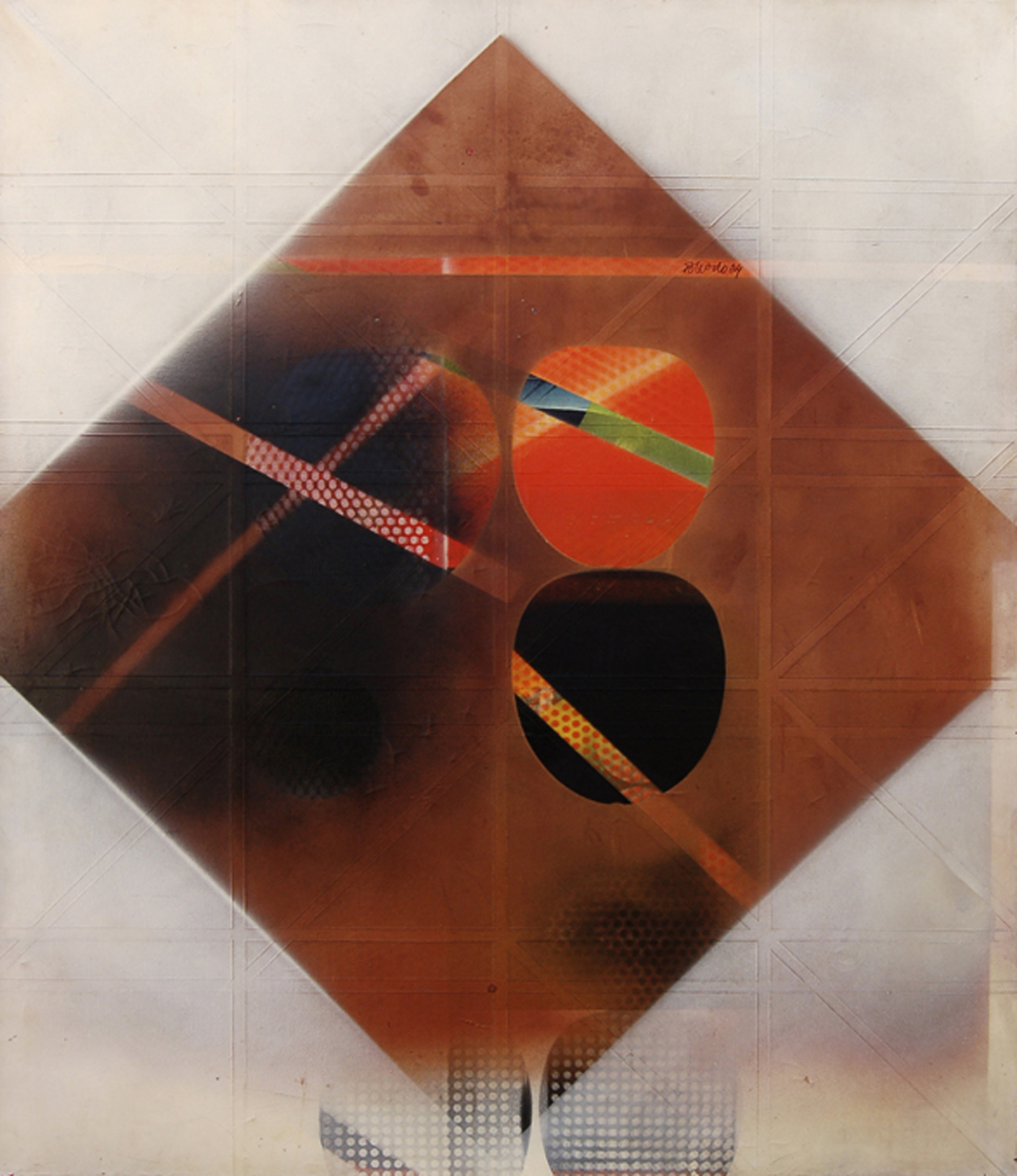
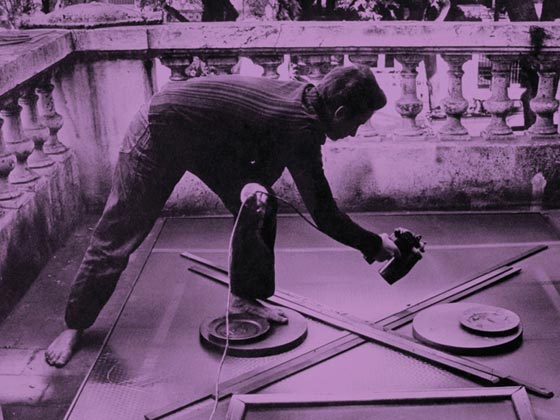
Polesello joven is divided into five exhibition sections. It begins with his early work: monotypes, ink drawings, tempera paintings, and oil paintings from 1958 and 1959, featuring geometric abstraction. The second section continues with large-format works from the early 1960s, including his first experiments with air guns and metal sheets, which Polesello used as matrices to generate color vibrations in freer abstractions. This section includes a five-meter mural from 1960/6, never before exhibited. The third section covers the years 1964-1966 with paintings, focusing on the work he exhibited at the II American Art Biennial, Industrias Kaiser (Córdoba, 1964), the Esso Prize (Washington, 1965), and the 8th São Paulo Biennial (1965). This was also a period in which he moved freely between painting, graphic design, textiles, and objects. Here you will see a display case related to his tapestries for the Galería del Sol and graphic design for publications such as El arte del tejer, Tiempo de Cine, posters, and art catalogs.
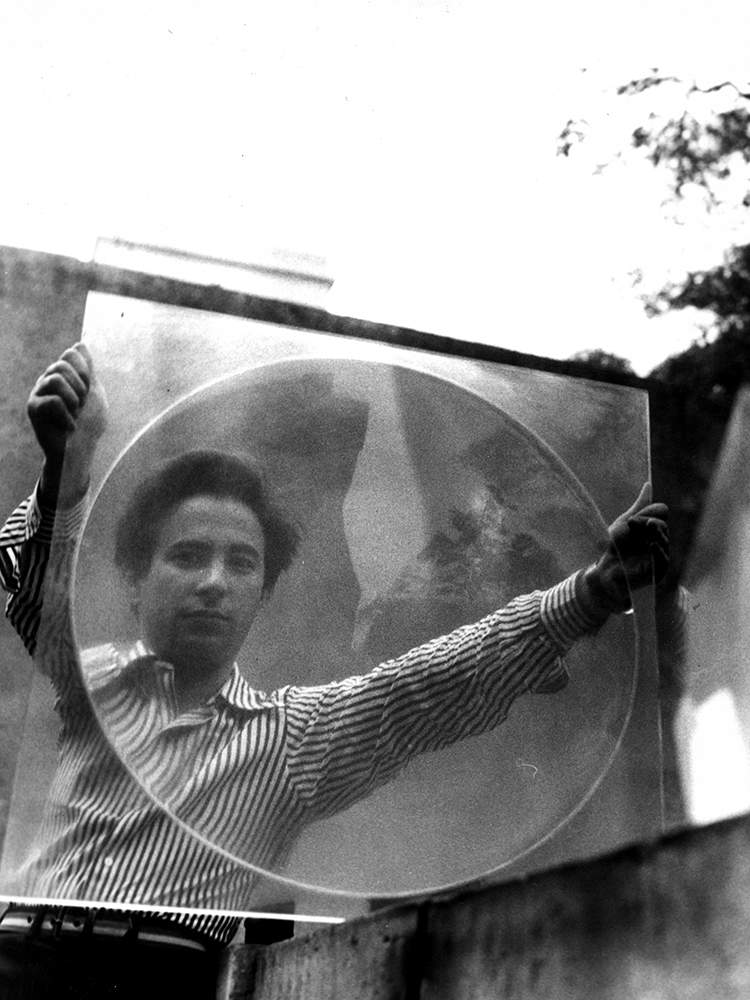
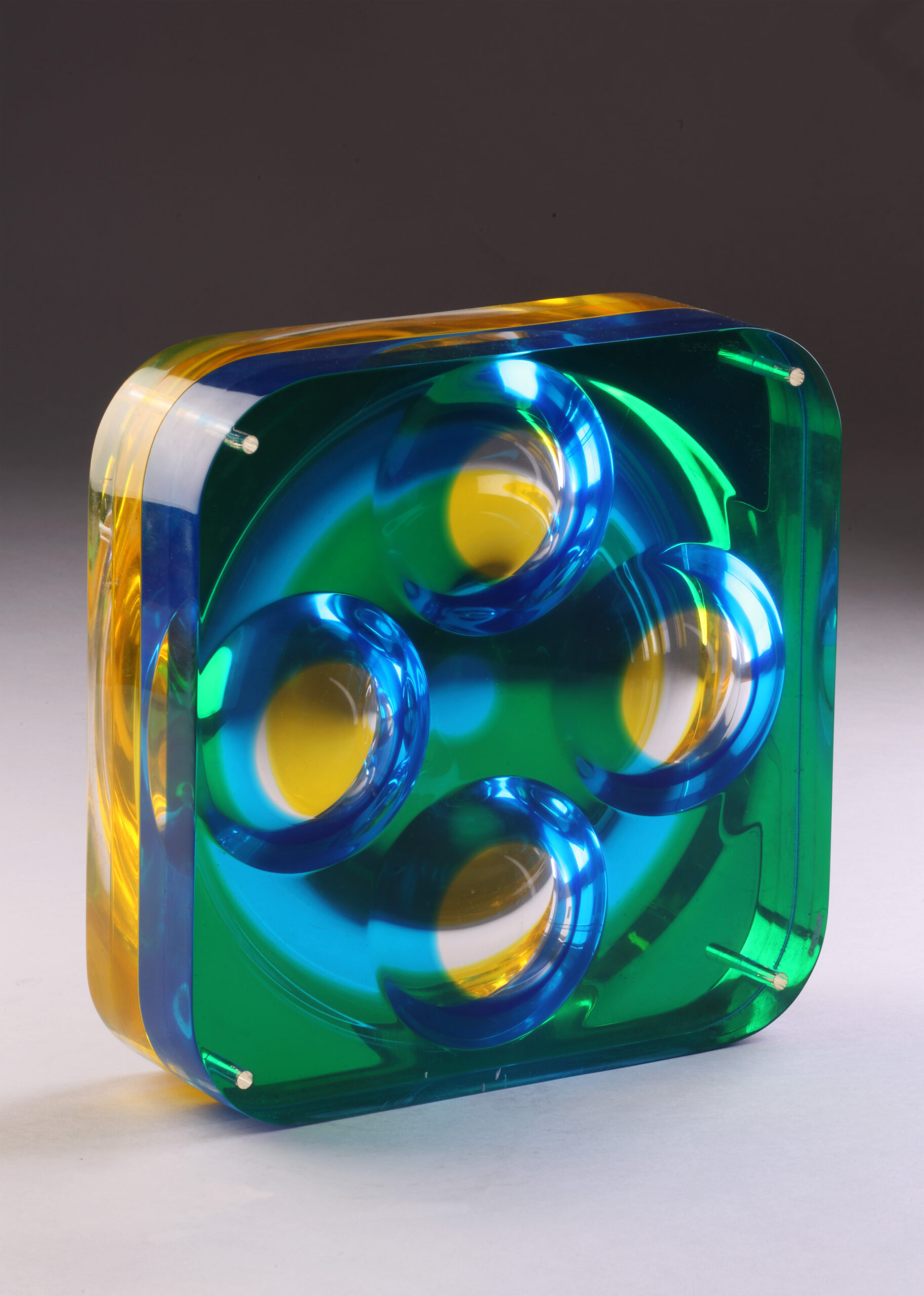
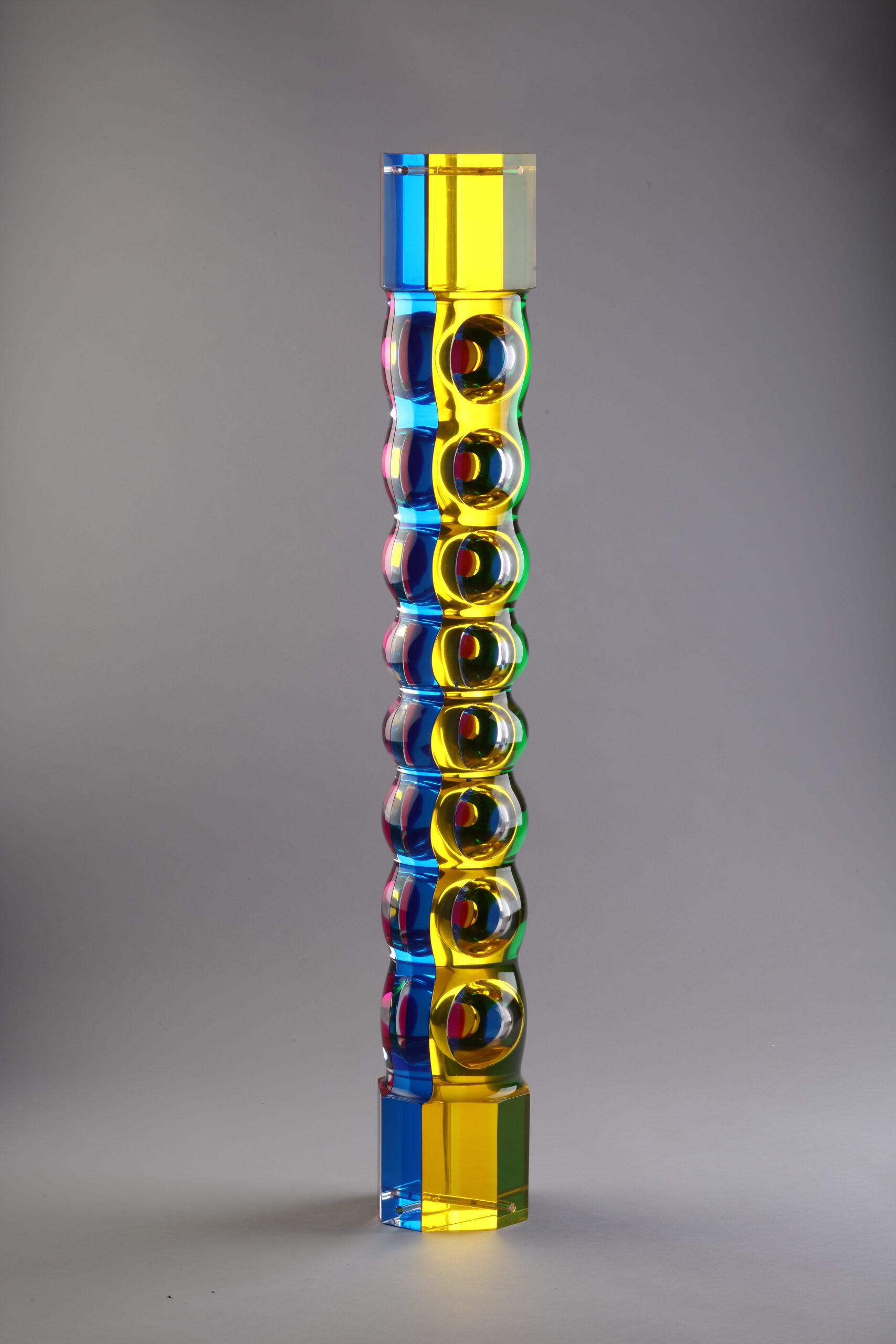
The fourth section, beginning in 1967, displays his early works in carved acrylic—mainly magnifying glasses—which function in space by distorting his own paintings. His pictorial explorations focus on color and image distortion in a more synthetic form. During this period, his solo exhibitions at the Museum of Modern Art in Bogotá and the Museum of Fine Arts in Caracas stand out. Finally, the fifth section shows his experiments related to space and viewer participation, with large carved acrylic plates—transparent and colored—columns, and blocks, with multiple concave and convex carvings.
Polesello Archives
The exhibition began to take shape with the artist more than two years ago. Since late 2012, a team from the museum, led by Victoria Giraudo, Executive Curatorial Coordinator, and Josefina Barcia, assistant in the Curatorial Department, began researching the Polesello archive, under the coordination of Verónica Rossi, an archivist hired specifically to work on its organization and cataloging.
The archive begins in 1957 and contains an exhaustive record of photos, manuscripts, newspaper articles, brochures, books, and correspondence, among other materials that reflect his vast output. A selection of these documents can be seen in different display cases throughout the exhibition.
“In addition to the material already known to researchers, Polesello added boxes and folders containing private information, and set up a special work area in his home. He was always very enthusiastic about the project, contributing data and memories, along with ideas about how he wanted his exhibition to be,” explains Victoria Giraudo.
Catalogue
In conjunction with the exhibition, MALBA will publish a bilingual (Spanish-English) catalogue designed to become a crucial point of reference for Polesello’s historical production.