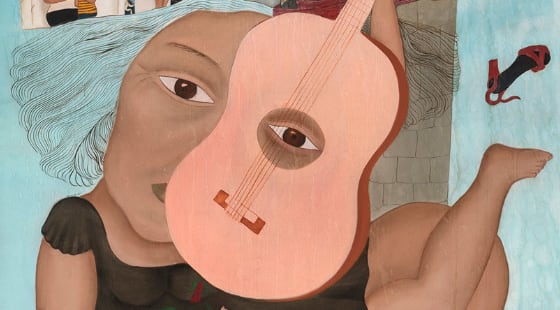
08/12/23— 26/02/24
Gallery 5, Level 2, and Gallery 1, Level -1
Opening: Thursday, December 7, 7:00 p.m.
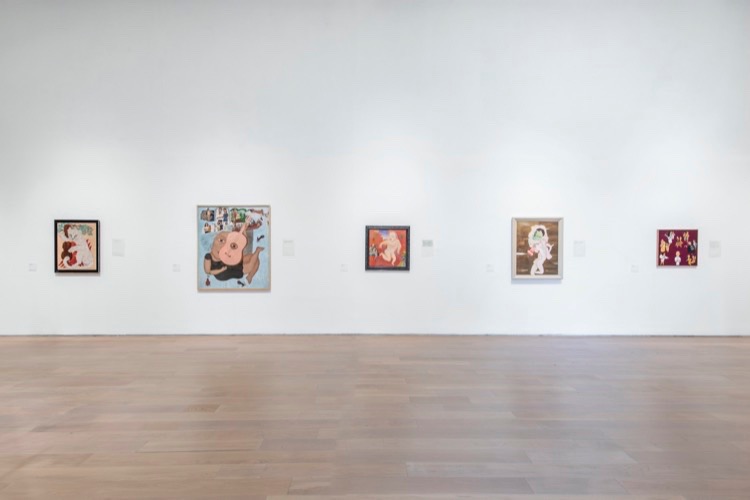
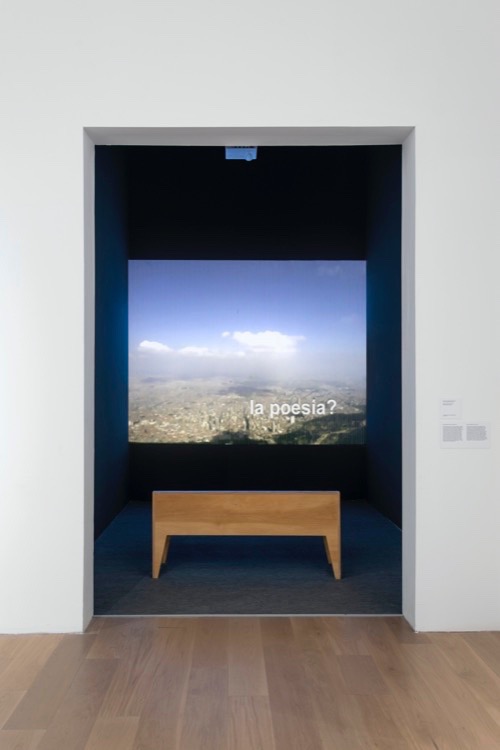
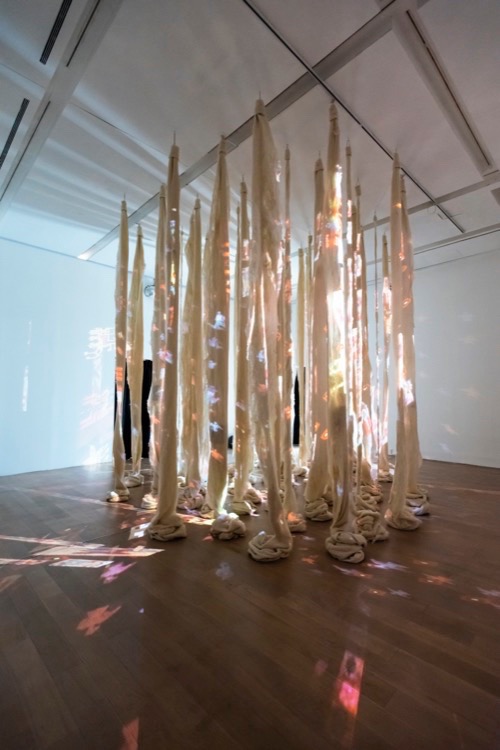
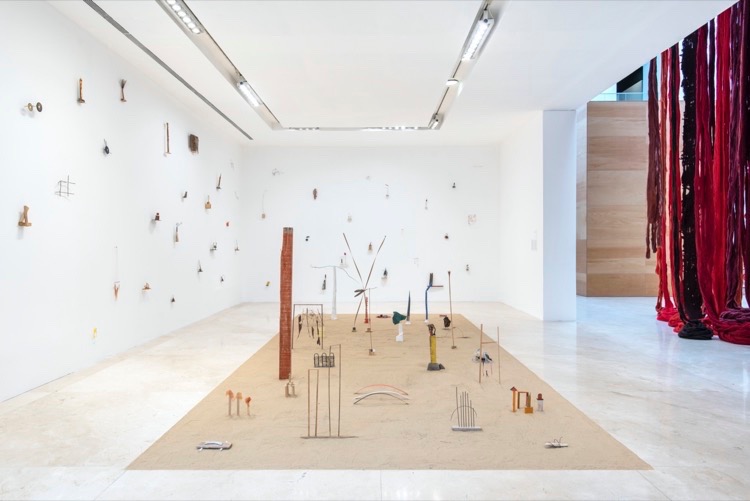
Dreaming Water, a Retrospective of the Future (1964–…) is the most comprehensive exhibition to date dedicated to poet, visual artist, and feminist activist Cecilia Vicuña (Santiago, Chile, 1948). It offers an interpretation of Vicuña's work from the perspective of South America and reviews sixty years of her production, highlighting her links with her native country, Argentina, the Andes mountain range, pre-Columbian textile memory, feminist struggles and eroticism, as well as the demands for self-determination of indigenous communities.
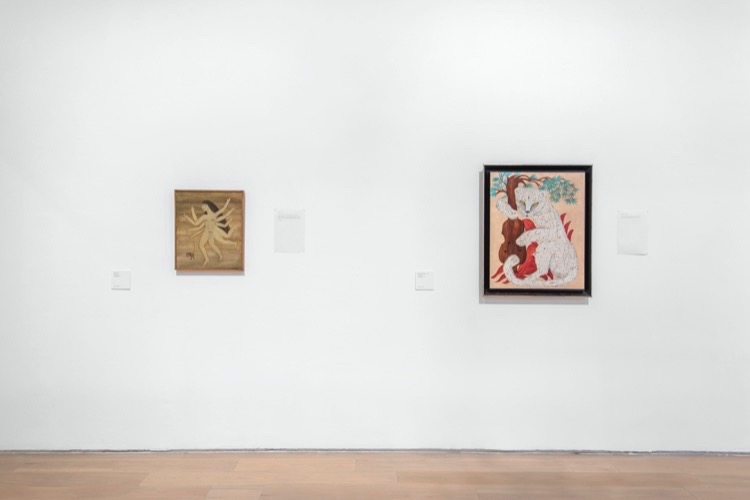
The exhibition brings together nearly 200 works, including paintings, drawings, texts, silkscreen prints, collages, textiles, videos, photographs, installations, book objects, documents, and sound performances created in different locations in the Americas and Europe. Dreaming Water reaffirms Vicuña's commitment to popular struggles, respect for human rights, and the importance of opposing devastation in a broad sense.
In the words of curator Miguel A. López: "Vicuña's poetics embrace everything and nothing at the same time, contaminating languages, disregarding hierarchies, and expressing themselves with seismic force. It can take the form of poetry, painting, sculpture, collage, drawing, or textile art, but also oral improvisations, television programs, interviews, seed and tree cultivation, film, performances, comics, theater sets, chalk murals, street graffiti, educational workshops, protest actions, flyers, and manifestos. The underground engine that links all these creative explosions is a desire to change the material and historical conditions of our existence.
The name of the exhibition represents an invitation to change our relationship with the earth. “Without humidity, there is no humanity,” the artist reminds us. Her creations are not only testimonies of the past but, above all, witnesses to an open future, just as this retrospective presents her work as an experience that is not definitive but alive and in progress.
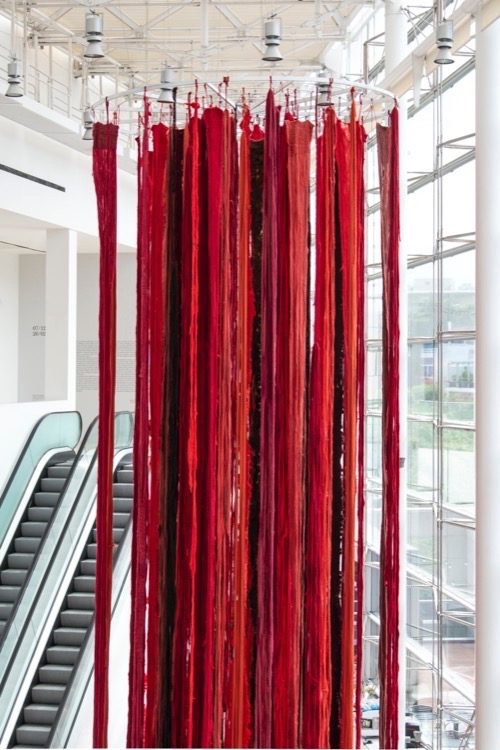
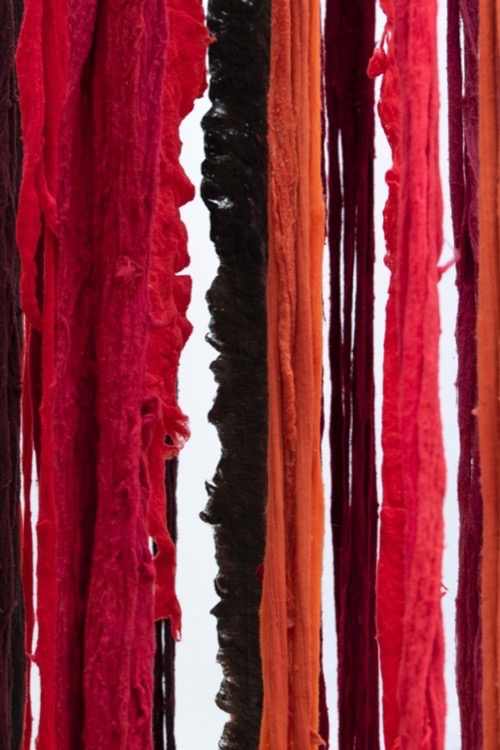
In this regard, the double-height space above the museum's Level 1 gallery features the site-specific installation Quipu menstrual (The Blood of the Glaciers), originally conceived by Vicuña in 2006 as a way of expressing her support for Michelle Bachelet, Chile's first female president.
Organized in collaboration with the National Museum of Fine Arts in Santiago, Chile, and the Pinacoteca de São Paulo.
Curator: Miguel A. López.
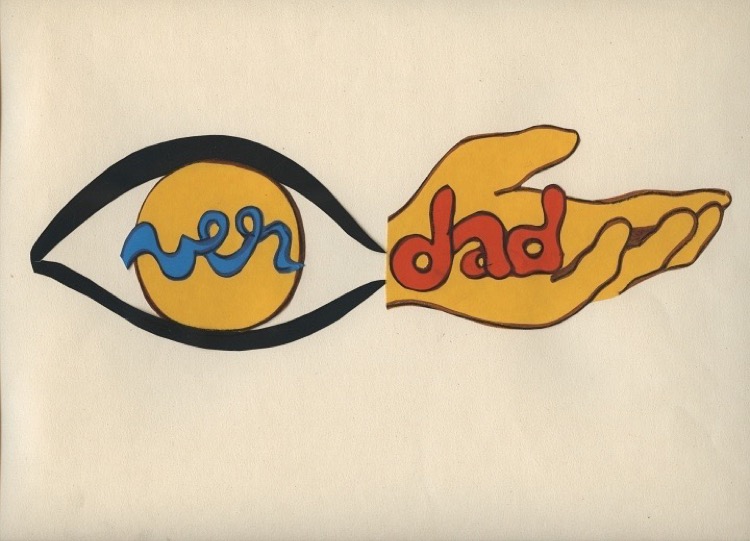
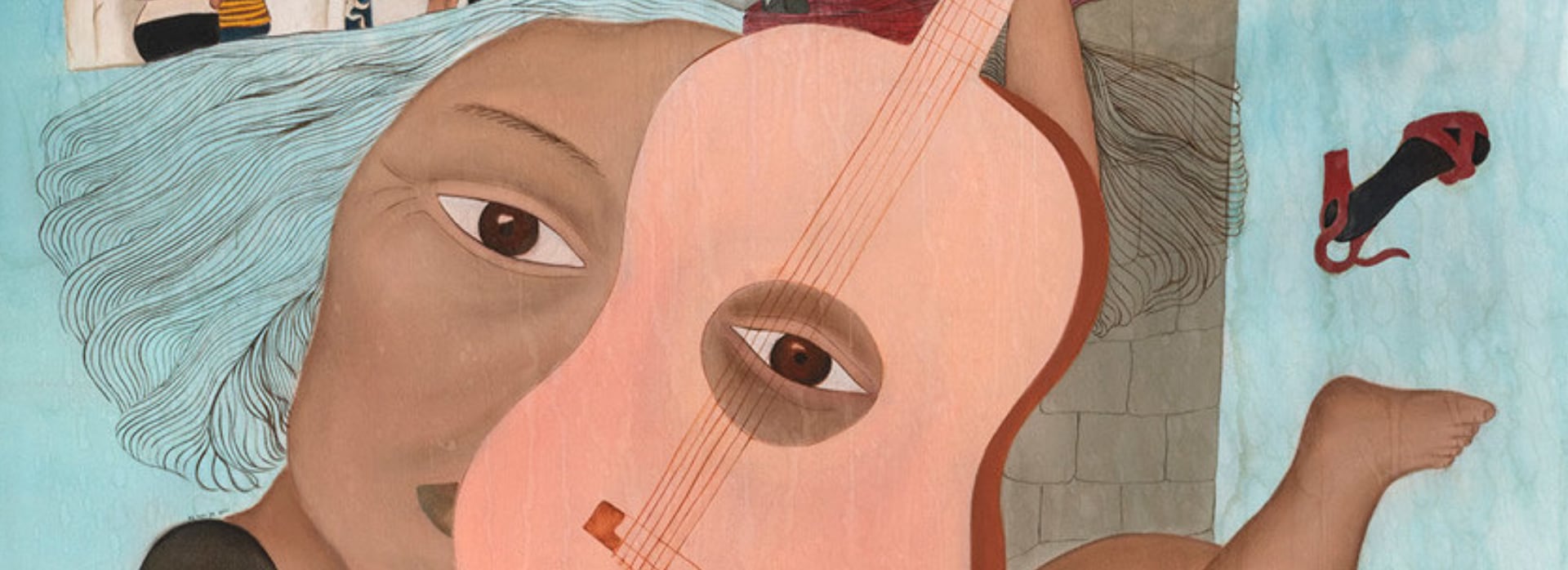
Images: Cecilia Vicuña. Bendígame mamita. 1978; y Ver Dad, 1974.
Dossier
See dossier of the exhibition (Issuu) →
Download dossier of the exhibition (PDF) →
Guided Tours
Wednesday, Thursday, and Saturday at 5:00 p.m.
No prior registration is required.
Catalogue
To mark the exhibition, Malba —in collaboration with the National Museum of Fine Arts in Santiago, Chile, and the Pinacoteca de São Paulo— is publishing the most comprehensive monograph to date on the work of Cecilia Vicuña.
The book brings together more than 200 works, including paintings, drawings, silkscreen prints, collages, textiles, videos, photographs, installations, poetry collections, book objects, and performances. It contains a main text by curator and editor Miguel A. López in epistolary format—a letter addressed to the artist—as well as new essays by Elizabeth A. Povinelli, Catherine de Zegher, and José de Nordenflycht. It includes two texts by Vicuña on her drawings from the "Palabrarmas" project and the activism of the Artists for Democracy group, as well as a conversation between Vicuña, Marisol de la Cadena, and Camila Marambio.
Audioguides
A series of audio tracks narrated by curator Miguel A. López, which delve into the core themes and works of the exhibition.
Cecilia Vicuña
Santiago de Chile, 1948
Poet, artist, activist, and filmmaker whose work addresses pressing concerns of the modern world, including ecological destruction, human rights, and cultural homogenization. Born and raised in Santiago, Chile, she lived in exile from the early 1970s onwards, following the military coup against President Salvador Allende. In London, she co-founded Artists for Democracy in 1974.
Vicuña coined the term “precarious art” in the mid-1960s in Chile as a new, independent, and uncolonized category to describe her works composed of debris and structures that disappear into the landscape. These include her quipus (knots, in Quechua), conceived as poems in space. Vicuña has reinvented the ancient pre-Columbian system of communication through quipus through ritual acts that weave together the urban landscape, rivers, and oceans, as well as people, to reconstruct a sense of unity and awareness of interconnectedness. These works unite art and poetry as a way of “listening to an ancient silence that waits to be heard.” In turn, the Palabrarmas (word-weapons) emerge from a deep investigation into the roots of language. His early work as a poet in the 1960s was celebrated by avant-garde magazines such as El Corno Emplumado (Mexico City, 1961-1968), but also censored and repressed for many years.
Solo exhibitions of Vicuña's work have been organized at many institutions, including the Museo de Bellas Artes, Santiago, Chile (2023); Tate Modern, London, United Kingdom (2022); Solomon R. Guggenheim Museum, New York, NY (2022); Miguel Urrutia Museum of Art (MAMU), Bogotá, Colombia (2022); Dos de Mayo Art Center (CA2M), Madrid, Spain (2021); CCA Wattis Institute of Contemporary Art, San Francisco, CA (2020); and University Museum of Contemporary Art, Mexico City, Mexico (2020). His work has been featured in numerous group exhibitions, including documenta 14, Athens and Kassel (2017), and the 59th Venice Biennale (2022), and is included in major museum collections worldwide.
Author of more than 30 volumes of art and poetry published in the United States, Europe, and Latin America.
Vicuña won the 2023 National Prize for Plastic Arts, one of the most prestigious awards given by her homeland. Prior to this recognition, Vicuña was elected an honorary foreign member of the American Academy of Arts and Letters and also received the Golden Lion for Lifetime Achievement in 2022 at the 59th Venice Biennale.